Biography overview
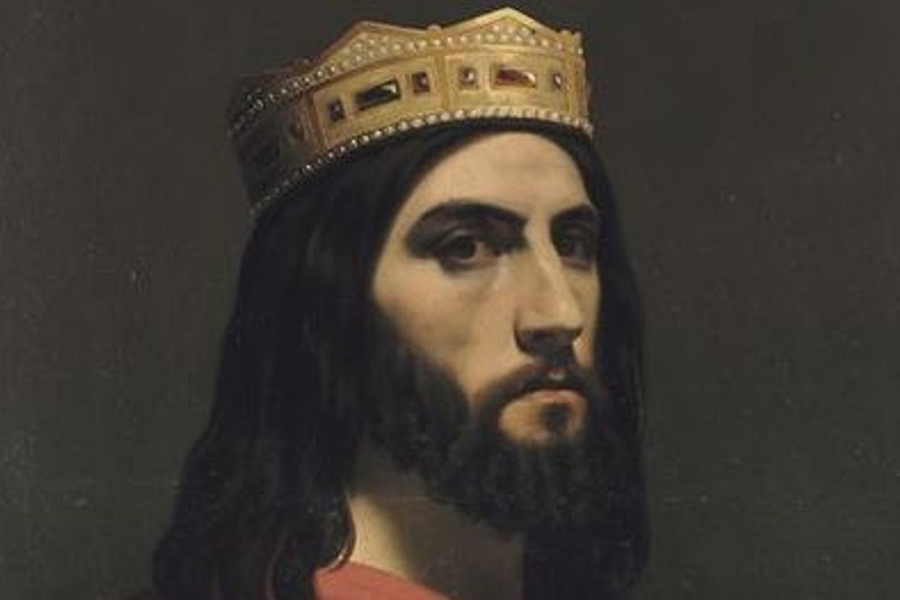
Chrodbert I (also styled Robert I or Radobertus) stands in the dim corridors of 7th-century Frankish power as a figure of administration rather than battlefield glory. Born circa 600 CE in Neustria, he operated at the intersection of royal court and the church, a hinge between secular rule and ecclesiastical order. Records and later genealogies place his death in 695 CE. Across roughly 95 years that bracket the lives of his extended kin, Chrodbert’s life reads like the serviceable beam of a great house: mostly unseen, but essential to keeping the structure upright.
He is most often associated with three types of activity: the royal chancery (as a referendary), palace government (as a mayor or steward in Burgundy), and ecclesiastical office (traditionally linked to Tours, possibly to Paris). The chronology attached to these roles is approximate and sometimes disputed; still, the outline is clear: a courtly start in the 630s, political stewardship through the 640s–660s, and sustained ecclesiastical presence from about 660 until his death in 695.
Chrodbert moves through the record like a competent steward—ordering seals, signing charters, shepherding petitions—rather than a soldier or king. His power, therefore, is measured not in camps taken but in signatures, administrative continuity, and the placement of kin in positions that allowed his family to expand its influence into what would later be called the Robertian lineage.
Basic information
| Field | Detail |
|---|---|
| Name | Chrodbert I (also Robert I, Radobertus, Chrotbert) |
| Approximate birth | c. 600 CE |
| Death | 695 CE |
| Region of origin | Neustria (northern Francia), with family estates in Hesbaye |
| Principal roles (attributed) | Referendary (c. 630), Mayor of the Palace (Burgundy, c. 642–662), Bishop of Tours (c. 660–695) — bishopric and other titles debated |
| Father | Charibert of Hesbaye (c. 555–636) |
| Mother | Wulfgurd (dates unknown) |
| Known children | Lambert I of Hesbaye (c. 620–after 650); Saint Angadrisma (c. 615–695) |
| Dynastic link | Ancestor of the Robertian dynasty; ancestral connection to later Capetian lines asserted in genealogies |
Family and relationships
Chrodbert’s family is a lattice of regional nobility and speculative royal connection. Genealogies present Charibert of Hesbaye (c. 555–636) as his father and Wulfgurd as his mother. He is usually described as the father of two notable children: Lambert I, who carried the family’s territorial influence into the next generation, and Angadrisma, later venerated as a saint and abbess. Lineage charts often try to weave Chrodbert back to the Merovingian royal house—names such as Charibert I and Chlothar I appear in putative ancestral lines—but those royal links are uneven and debated.
| Relative | Approx. dates | Relationship / note |
|---|---|---|
| Charibert of Hesbaye | c. 555–636 | Father; regional comes (count) in Hesbaye |
| Wulfgurd | unknown | Mother; noble Frankish origin |
| Aldebert | unknown | Brother; little documented |
| Erlebert (Haltbert) | unknown | Brother or close kin; sometimes conflated in pedigrees |
| Lambert I of Hesbaye | c. 620–after 650 | Son; continued territorial rule in Hesbaye |
| Saint Angadrisma | c. 615–695 | Daughter; became a nun and abbess after annulled marriage |
| Chlothar I | c. 497–561 | Alleged great-grandparent in some reconstructions (disputed) |
| Robert I, Count of Hesbaye | c. 697–758 | Great-grandchild through Lambert; crucial figure for later Robertians |
These relationships read like strategic stitches in a tapestry: marriages and offices produced continuity. Open questions remain: the identity of Chrodbert’s spouse is not firmly recorded (candidates appear in later compilations), and some sibling and child assignments are contested among the surviving vitae and charters.
Career, offices, and duties
Chrodbert’s recorded career leans heavily toward administration. The following table summarizes attributed offices with their conventional date ranges and primary duties.
| Role | Period (approx.) | Main duties | Notes |
|---|---|---|---|
| Referendary to Dagobert I | 630s | Manage petitions, oversee seals and chancery business | Court-level bureaucratic office; marks proximity to royal power |
| Mayor of the Palace (Burgundy) | c. 642–662 | Regional administration, palace management | Political stewardship during Merovingian fragmentation |
| Bishop of Tours (attributed) | c. 660–695 | Ecclesiastical oversight, liturgical and diocesan governance | Bishopric attribution is part of scholarly debate; some sources assign Paris instead or doubt the episcopal claim |
Numbers matter here: the span from 630 to 695 — some 65 years — is the arc during which Chrodbert’s activities are usually placed. Whether he held these offices continuously, in quick succession, or partly simultaneously is unclear; 7th-century officeholding could be fluid, and administrative titles were not yet standardized in the way later medievalists expect.
Financially, like most nobles of the time, Chrodbert’s wealth would have been land-based: estates in Hesbaye and royal favor more than coined banknotes. There is no surviving inventory of his holdings; his influence is instead visible in the positions his family secured and the continuity of their territorial claims.
Extended timeline (key dates and numbers)
| Year (approx.) | Event |
|---|---|
| c. 600 | Birth of Chrodbert I in Neustria |
| 615–620 | Births of two children recorded in traditions: Angadrisma and Lambert I |
| 630 (April 8 noted in some records) | Active in the chancery as referendary to King Dagobert I |
| 636 | Death of Charibert of Hesbaye (father) — Chrodbert’s family prominence increases |
| 642–662 | Service often ascribed as Mayor of the Palace in Burgundy |
| c. 660–695 | Attributed episcopal service (Tours) spanning roughly 35 years |
| 695 | Death of Chrodbert I |
These dates form a spine of activity; the flesh around the bones is episodic—charters, vitae, and later genealogies that push and pull on names and offices. Still, the pattern points to sustained influence across at least three decades of public life.
Uncertainties and historical texture
The life of Chrodbert I is a study in absence as much as presence. Where a modern biography would lean on payrolls, letters, and administrative logs, the 7th-century picture must be assembled from a handful of charters, saintly vitae, and genealogical reconstructions. That scarcity produces divergent claims: bishoprics that may be attributed to different persons; spouses named in later pedigrees but missing from contemporary records; and royal bloodlines suggested but not airtight. Yet the absence of dramatic conflict in the surviving fragments is itself telling: Chrodbert’s legacy is one of steady consolidation rather than rupture.
He is not a thunderbolt figure. He is a careful locksmith of power—turning keys, sealing documents, holding doors open so the next generation could pass through. In the long shadow of Merovingian decline and the rising silhouette of the Robertians, Chrodbert I appears as a practical architect: unsung, essential, and quietly influential.